Embarking on the journey of Clinical Trials for COVID-19 Vaccines, this opening paragraph aims to provide a captivating glimpse into the world of vaccine development and testing, shedding light on the crucial phases involved in bringing effective solutions to the forefront.
As we delve deeper into the realm of vaccine trials, we uncover the intricate process of evaluating safety and efficacy, paving the way for a better understanding of the meticulous work behind the scenes.
CLINICAL TRIALS
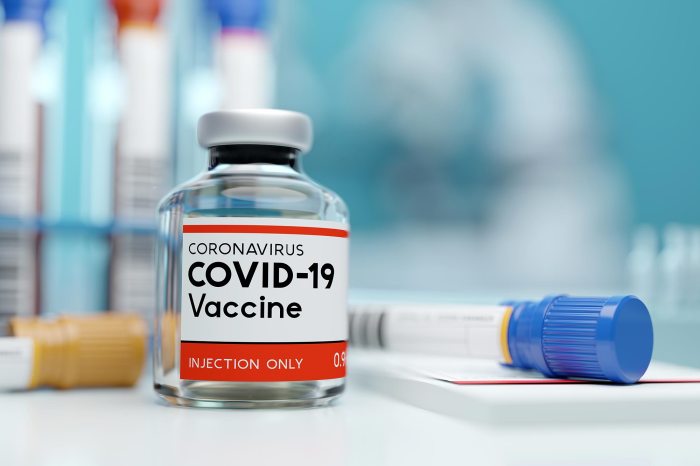
Clinical trials for COVID-19 vaccines play a crucial role in determining the safety and efficacy of potential vaccines before they can be approved for widespread use. These trials are essential in ensuring that vaccines are both safe and effective in preventing the spread of the virus.
Phases of Clinical Trials
Clinical trials for vaccine development typically involve several phases:
- Phase 1: In this phase, a small group of healthy volunteers receives the vaccine to assess its safety and dosage levels.
- Phase 2: A larger group receives the vaccine to further evaluate its safety, immunogenicity, and optimal dosage.
- Phase 3: This phase involves a much larger group to assess the vaccine’s efficacy, safety, and potential side effects compared to a control group.
Importance of Randomized Controlled Trials
Randomized controlled trials are crucial in assessing vaccine efficacy as they help eliminate bias and ensure that the results are valid and reliable. By randomly assigning participants to either the vaccine group or the control group, researchers can accurately measure the vaccine’s effectiveness in preventing COVID-19. This method allows for a more definitive conclusion on the vaccine’s ability to protect against the virus.
TYPES OF CLINICAL TRIALS
Randomized controlled trials (RCTs) and observational studies are two common types of clinical trials used in research. While RCTs involve random assignment of participants to different groups to test the effectiveness of interventions, observational studies observe participants in their natural settings without any intervention assignment.
Randomized Controlled Trials vs. Observational Studies
- Randomized Controlled Trials (RCTs):
- – Involve random assignment of participants to control and intervention groups.
- – Considered the gold standard for evaluating the efficacy of treatments or interventions.
- – Help establish causality between interventions and outcomes.
- Observational Studies:
- – Do not involve random assignment of participants.
- – Can provide valuable insights into real-world effectiveness and potential associations.
- – Are useful when RCTs are not feasible or ethical.
Significance of Double-Blind Trials in COVID-19 Vaccine Research
Double-blind trials are crucial in COVID-19 vaccine research to minimize bias and ensure the reliability of results. In double-blind trials, neither the participants nor the researchers know who is receiving the vaccine or the placebo. This design helps prevent subjective influences on the outcomes, leading to more robust and trustworthy findings.
Role of Placebo-Controlled Trials in Evaluating Vaccine Safety and Efficacy
- Placebo-controlled trials are essential in assessing the safety and efficacy of COVID-19 vaccines.
- By comparing the outcomes between the group receiving the vaccine and the group receiving a placebo, researchers can determine the true effects of the vaccine.
- Placebo-controlled trials help differentiate between the actual benefits of the vaccine and any placebo effects, providing critical information for regulatory approval and public health decisions.
PARTICIPANTS AND RECRUITMENT
In conducting clinical trials for COVID-19 vaccines, selecting participants is a crucial aspect of the research process. It is essential to ensure that the participants meet specific criteria to generate reliable and meaningful data.
Selection Criteria for Participants
- Participants must be within a certain age range, typically adults, as the vaccine’s effects on children may differ.
- Individuals with underlying health conditions or comorbidities may be excluded to reduce confounding variables.
- Participants should be willing to comply with the trial protocol and follow-up visits.
- Healthcare workers and individuals at higher risk of exposure to COVID-19 may be prioritized.
Recruiting Diverse Participant Populations
Recruiting a diverse range of participants in vaccine trials is crucial to ensure the vaccine’s effectiveness across different demographics. However, this can present various challenges.
- Barriers to participation, such as lack of awareness, transportation issues, and language barriers, must be addressed to reach a diverse population.
- Community engagement and partnerships with local organizations can help increase participation from underrepresented groups.
- Tailoring recruitment strategies to specific demographics, such as using culturally sensitive approaches, can improve diversity in clinical trials.
Ethical Considerations in Recruiting Volunteers
- Volunteers must provide informed consent after receiving detailed information about the trial, including potential risks and benefits.
- Recruitment methods should be transparent, and participants should not feel coerced or pressured to participate.
- Ensuring participant confidentiality and data protection is essential to maintain trust and ethical standards in clinical trials.
TRIAL DESIGN AND IMPLEMENTATION
Designing a clinical trial protocol for COVID-19 vaccines involves meticulous planning and adherence to regulatory guidelines to ensure the safety and efficacy of the vaccine candidates. The process typically includes identifying the study objectives, defining the study population, determining the primary and secondary endpoints, outlining the study procedures, and establishing the statistical analysis plan.
Obtaining Regulatory Approval for Vaccine Trials
In order to conduct clinical trials for COVID-19 vaccines, researchers must obtain regulatory approval from health authorities such as the Food and Drug Administration (FDA) in the United States or the European Medicines Agency (EMA) in Europe. The steps involved in obtaining approval usually include submitting a detailed clinical trial protocol, providing preclinical data on the vaccine candidate, demonstrating manufacturing quality, and ensuring ethical considerations for participant safety.
Factors Influencing the Duration of Clinical Trials
Several factors can influence the duration of clinical trials for COVID-19 vaccines, including the complexity of the study design, the size of the study population, the rate of participant recruitment, the occurrence of adverse events, and the availability of resources. Additionally, regulatory requirements, data analysis, and the need for follow-up assessments can also impact the overall timeline of the trial.
In conclusion, the realm of Clinical Trials for COVID-19 Vaccines is a dynamic field that requires precision, dedication, and ethical considerations to ensure the well-being of participants and the advancement of global health. As research continues to evolve, the quest for effective vaccines remains at the forefront of scientific endeavors, shaping a brighter future for all.
Common Queries
How are participants selected for COVID-19 vaccine trials?
Participants are selected based on specific criteria such as age, health status, and risk factors to ensure diverse representation in the trials.
What is the significance of double-blind trials in COVID-19 vaccine research?
Double-blind trials help eliminate bias by keeping both researchers and participants unaware of who receives the vaccine or a placebo, ensuring accurate results.
How are clinical trial protocols designed for COVID-19 vaccines?
Clinical trial protocols are meticulously crafted to Artikel the objectives, methodology, participant criteria, and ethical considerations of the study.