Embarking on the journey of Clinical Trials for Rare Diseases, we delve into the crucial realm of medical research where innovation and hope intersect, paving the way for groundbreaking discoveries and life-changing treatments.
Exploring the complexities and triumphs within this specialized field, we uncover the significance of patient involvement, ethical considerations, and the diverse types of trials shaping the future of rare disease treatment.
Clinical Trials for Rare Diseases
Clinical trials play a crucial role in advancing research for rare diseases, providing valuable insights into potential treatments and improving patient outcomes.
Importance of Clinical Trials in Researching Rare Diseases
Clinical trials for rare diseases are essential for testing the safety and efficacy of new treatments, as well as understanding the natural history of these conditions. They help to establish evidence-based guidelines for managing rare diseases and offer hope to patients and their families.
Challenges of Conducting Clinical Trials for Rare Diseases
- Small patient populations: Due to the rarity of these diseases, recruiting enough participants for clinical trials can be challenging.
- Limited funding: Research for rare diseases often receives less funding compared to more common conditions, making it difficult to conduct large-scale trials.
- Diagnostic delays: Diagnosing rare diseases can be complex and time-consuming, leading to delays in starting clinical trials.
- Lack of awareness: Many healthcare professionals may not be familiar with rare diseases, resulting in underdiagnosis and underrepresentation in clinical trials.
Examples of Successful Clinical Trials for Rare Diseases
One notable example of a successful clinical trial for a rare disease is the development of enzyme replacement therapy for Gaucher disease. This treatment has significantly improved the quality of life for patients with this rare genetic disorder.
Types of Clinical Trials
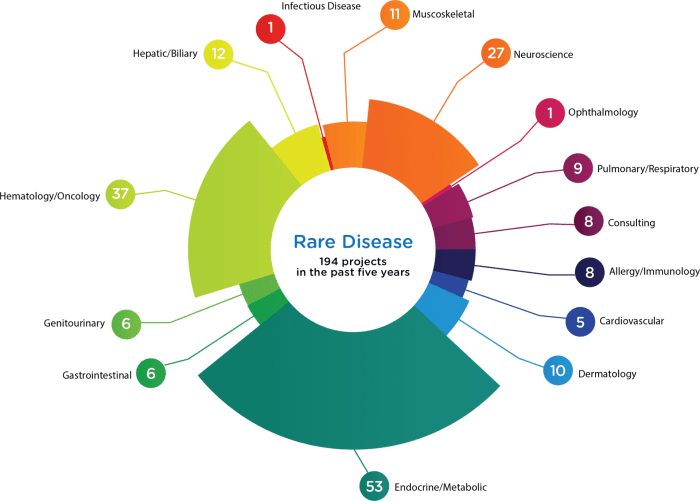
Clinical trials for rare diseases come in various types, each playing a crucial role in advancing research and treatment options for these conditions.
Treatment Trials
Treatment trials focus on testing new therapies or interventions for rare diseases. These trials aim to assess the safety and efficacy of potential treatments, ultimately providing patients with better care and management. For example, a treatment trial for cystic fibrosis led to the development of groundbreaking medications like ivacaftor, significantly improving the quality of life for patients with this rare genetic disorder.
Prevention Trials
Prevention trials aim to identify strategies to prevent the onset or progression of rare diseases. These trials are essential in understanding risk factors and developing preventive measures to reduce the burden of these conditions. For instance, a prevention trial for hereditary breast and ovarian cancer (caused by BRCA gene mutations) led to the discovery of effective preventive measures like prophylactic surgery or targeted therapies.
Diagnostic Trials
Diagnostic trials focus on improving the accuracy and efficiency of diagnosing rare diseases. These trials aim to develop new diagnostic tools, biomarkers, or imaging techniques that can aid in early detection and timely intervention. For example, a diagnostic trial for Huntington’s disease led to the identification of specific genetic markers that can confirm the presence of the disease, enabling early diagnosis and personalized treatment plans.
Screening Trials
Screening trials aim to identify individuals at risk of developing rare diseases through population-based screening programs. These trials are crucial in early detection, genetic counseling, and implementing preventive measures to reduce the impact of these conditions. For instance, a screening trial for familial hypercholesterolemia led to the implementation of cholesterol screening programs, enabling early identification of affected individuals and initiation of appropriate interventions to prevent cardiovascular complications.
Patient Recruitment and Participation
Patient recruitment is a crucial aspect of clinical trials for rare diseases as it directly impacts the success of the study. Without a sufficient number of participants, it can be challenging to gather meaningful data and draw accurate conclusions regarding the efficacy and safety of the treatment being tested.
Importance of Patient Recruitment
- Ensures the study meets sample size requirements for statistical significance.
- Allows researchers to assess the treatment’s effectiveness in a real-world setting.
- Helps in evaluating the safety profile of the investigational drug or therapy.
Strategies for Increasing Patient Participation
- Collaboration with patient advocacy groups to raise awareness about the trial.
- Utilizing social media and online platforms to reach a wider audience.
- Offering incentives such as travel reimbursement or compensation for participation.
- Establishing a network of healthcare providers to refer eligible patients to the trial.
Impact of Patient Involvement
- Provides valuable insights into the patient experience and perspective on the treatment.
- Increases the diversity of the study population, leading to more generalizable results.
- Enhances the overall credibility and relevance of the clinical trial results.
Ethical Considerations
When it comes to conducting clinical trials for rare diseases, several ethical considerations must be taken into account to ensure the safety and well-being of participants.
Informed Consent Challenges
Obtaining informed consent from participants with rare diseases can be particularly challenging due to the complexity of the conditions and the limited understanding of the disease by both patients and their families. Informed consent is crucial to ensuring that participants understand the risks and benefits of participating in the trial and can make an informed decision about their involvement.
- Patients may have limited access to information about their condition, making it difficult for them to fully comprehend the implications of participating in a clinical trial.
- Patients with rare diseases may also have cognitive impairments or communication difficulties that hinder their ability to provide informed consent.
- Families of patients with rare diseases may struggle to navigate the complexities of clinical trial information and may feel pressured to enroll their loved ones without fully understanding the implications.
Ensuring Ethical Conduct
Despite the challenges, there are ways to ensure the ethical conduct of clinical trials for rare diseases while considering the unique circumstances of these conditions.
- Provide additional support and resources to help participants and their families understand the clinical trial process and make informed decisions.
- Utilize independent advocates or support groups to assist patients in navigating the informed consent process and ensuring that their rights are protected.
- Implement clear communication strategies and education programs tailored to the specific needs of patients with rare diseases to enhance understanding and promote autonomy in decision-making.
In conclusion, Clinical Trials for Rare Diseases stand as beacons of progress and promise, where science and compassion unite to illuminate the path towards improved healthcare for those facing rare and challenging conditions.
FAQ Insights
How do clinical trials benefit rare disease research?
Clinical trials provide essential data on the efficacy and safety of potential treatments, helping researchers understand and address the unique challenges posed by rare diseases.
What are some strategies for increasing patient participation in rare disease clinical trials?
Engaging with patient advocacy groups, providing clear information about the trial process, and offering support services can help boost patient recruitment.
How are ethical considerations managed in clinical trials for rare diseases?
Ethical review boards oversee trial protocols to ensure participant safety and informed consent, particularly considering the vulnerabilities of individuals with rare diseases.